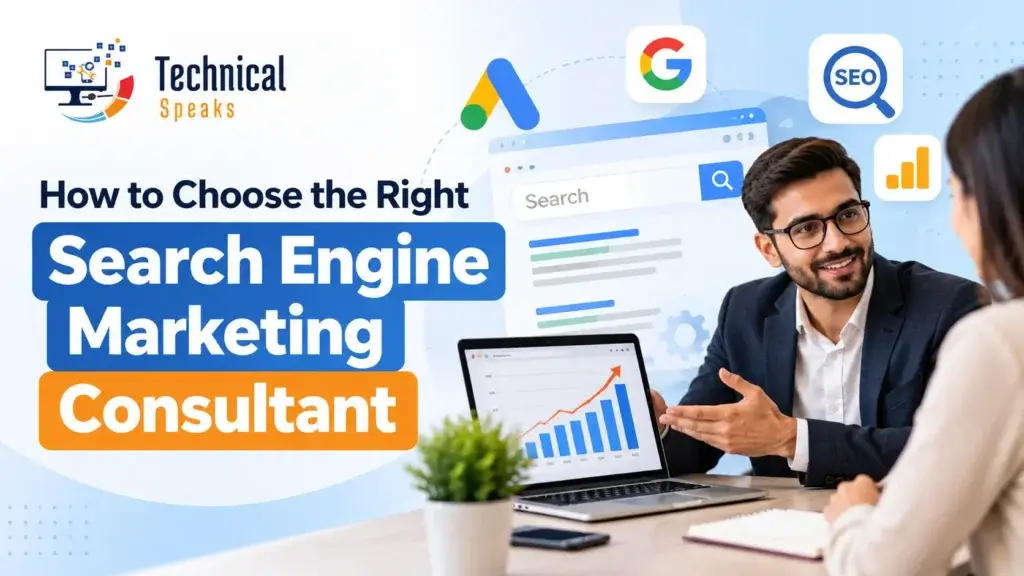
Search engine marketing consultants help you get found and get customers through search. That covers paid ads on Google and Bing, and often organic SEO too. To choose the right one, start with clear goals. Then check their experience in your industry and insist on full access to your own accounts and data. Finally, ask how they’ll measure results in revenue or leads, not just clicks.
A good consultant can turn your ad budget into a steady source of customers. A bad one can burn through it in a month. Here’s how to tell them apart.
What does a search engine marketing consultant do?
Search engine marketing (SEM) usually means paid search. In practice, many consultants work across the whole search channel:
- Paid search: Google Ads and Microsoft Advertising campaigns, including Search, Shopping, Performance Max and Demand Gen.
- Organic SEO: content, technical fixes and links, so you’re not paying for every click. Here’s how SEO vs PPC compare.
- Tracking and measurement: GA4, Google Tag Manager, enhanced conversions and Consent Mode, so the numbers are actually right.
- Landing pages: making sure the pages your ads point to convert. See how to create and optimize landing pages.
- AI search visibility: ads now appear in and around AI Overviews, and AI answers increasingly shape what people click. Learn how answer engine optimization works.
The best consultants tie all of this back to one question: is search bringing in profitable customers?
Consultant vs agency vs in-house
| Option | Best for | Watch out for |
|---|---|---|
| Freelance consultant | Small to mid budgets, hands-on expert attention | Limited capacity; one person is a single point of failure |
| Agency | Bigger budgets, multiple channels, need for a team | Junior staff doing the work after a senior sales pitch |
| In-house hire | Large, steady ad spend and long-term needs | Salary cost; one person can’t know everything |
Many businesses start with a consultant, then move to an agency or in-house team as spend grows. If you’re an agency yourself, white label SEO services are another option.
5 steps to vet search engine marketing consultants
1. Define your goals and scope first
Before you talk to anyone, write down:
- Your main goal: leads, online sales, store visits or brand awareness.
- Your monthly ad budget: this matters more than you’d think, because some consultants only take accounts above a certain spend.
- The help you need: full management, a one-off audit, or help with one area like Shopping feeds or local campaigns.
A clear brief helps you filter out consultants who sell the same package to everyone.
2. Check industry experience and real results
Ask:
- “Which industries have you worked in?” Someone who knows dental or ecommerce ads won’t spend months learning your market.
- “Can you show anonymized results?” Look for specifics such as lower cost per lead, higher conversion rate or better return on ad spend, with a time frame attached.
- “How do you handle seasonality or aggressive competitors?” Their answer shows whether they think strategically.
For healthcare, for example, see Google Ads for doctors vs SEO.
3. Insist on transparency and ownership
This one is non-negotiable:
- You own the ad accounts, analytics and data. The consultant gets access, not ownership.
- Reporting is clear and regular. Monthly is common, with a live dashboard in Looker Studio.
- They report on business outcomes, such as leads, sales and cost per acquisition, not just impressions and clicks.
Here’s what a good report looks like: how to create SEO reports for clients.
4. Test their technical skills
Ask how they handle:
- Conversion tracking: GA4, Tag Manager, enhanced conversions, Consent Mode and, for lead businesses, offline conversion imports from your CRM.
- Smart bidding: most accounts now use automated bidding. A good consultant explains how they feed it good data, such as conversion values, audience signals and negative keywords, rather than claiming to beat it by hand.
- Testing: structured tests for ad copy, landing pages and audiences.
- Performance Max and AI Max: how they keep automated campaigns from wasting budget, using brand exclusions, search term reviews and asset reporting.
A smart move is to ask for a short audit of your current account. It doubles as a skills test. If you’re hiring junior help, our PPC interview questions are useful too.
5. Check communication and fit
- Do they explain why results changed, not just what changed?
- Are they proactive, flagging problems before you notice them?
- Will you have one main contact and regular strategy calls?
What an SEM audit should include
A solid audit covers:
- Conversion tracking accuracy (are the right actions counted, and only once?)
- Account structure and campaign types
- Search terms report and negative keywords
- Wasted spend on irrelevant queries, locations or devices
- Ad assets (sitelinks, callouts, images) and ad strength
- Landing page speed and relevance
- Bidding strategy versus goals
- Competitor positioning, using SEO competitor analysis methods for organic
How SEM consultants price their work
| Model | Best for | Red flags |
|---|---|---|
| Monthly retainer | Ongoing management with a steady budget | Long lock-in contracts with no exit or performance review |
| Percentage of ad spend | Larger, growing ad budgets | Hidden fees on top; incentive to spend more, not better |
| Project-based | Audits, account setup, campaign launches | No handover or support after launch |
| Performance-based | Clear, trackable goals like leads or sales | Vague definitions of a “lead”; unrealistic promises |
Fees vary a lot by country, experience and ad spend, so compare written proposals rather than online price lists. A good proposal breaks down:
- Strategy and setup
- Ongoing management (hours or scope)
- Ad copy and landing page work
- Reporting and calls
- Who actually does the work
Red flags to avoid
Walk away from a consultant who:
- Guarantees rankings or results. Nobody controls Google. Here’s what it really takes to rank #1 on Google.
- Wants to own your ad account, or won’t give you admin access.
- Has no proper conversion tracking set up, or can’t explain what’s being counted.
- Runs broad match with no negative keywords and no search term reviews.
- Uses black hat SEO tactics such as PBNs, cloaking or link schemes. These are classic black hat SEO techniques, and they can lead to a Google penalty.
- Sends a generic proposal with nothing specific to your business or competitors.
Certifications like Google Ads or Microsoft Advertising are a plus, but they’re easy to get. Real results and clear answers matter more.
10 questions to ask before you sign
- How will search campaigns support our overall marketing funnel?
- How do you find keywords and manage negatives?
- How do you test ad copy and assets?
- Can you walk me through a recent account turnaround?
- Which tools do you use for research and tracking? (Many start with free SEO tools.)
- How do you make SEO and PPC work together?
- How do you approach landing page optimization?
- How do you manage Performance Max and other automated campaigns?
- Who will actually work on our account, and what happens if they leave?
- Can we speak to two or three current clients?
KPIs that actually matter
| Channel | Focus on |
|---|---|
| Paid | Conversions, cost per acquisition, return on ad spend, conversion rate, impression share |
| Organic | Clicks and conversions from Search Console and GA4, rankings for money keywords, CTR |
| Overall | Revenue or leads from search, customer lifetime value, branded search growth |
Skip vanity metrics like raw impressions or third-party “authority” scores. For a longer-term organic plan, quality matters most, starting with high-quality backlinks. If you need a team, here’s a list of top SEO service providers in India.
Agree on a 90-day review with clear milestones before you commit long term.
FAQ
What do search engine marketing consultants do?
They plan and manage paid search campaigns, often alongside SEO. They set up tracking, analyze performance and recommend changes to get more customers from search.
How much does an SEM consultant cost?
It depends on scope, experience, location and ad spend. Common models are a monthly retainer, a percentage of ad spend, project fees or performance-based pricing. Compare written proposals for the same scope.
Can one consultant handle both SEO and PPC?
Yes, many do, especially for small and mid-sized businesses. Larger companies often use separate specialists for depth.
How long before I see SEM results?
Paid campaigns start getting data within days, but they usually need several weeks of optimization to settle. SEO takes longer, often a few months for meaningful gains.
Should I hire a freelancer or an agency?
A freelancer gives you direct expert attention and usually lower overhead. An agency gives you a team, more capacity and backup. Choose based on budget, complexity and how much support you need.
Final thoughts
The right search engine marketing consultant is clear and honest, and they focus on your results, not just your ad spend. Define your goals, interview at least three candidates, ask for an audit, and make sure you own your accounts from day one.
Want help reviewing your search campaigns? Get in touch with our team today.
Saurabh K. has been working in SEO and digital marketing for 10+ years, helping businesses grow their search traffic.