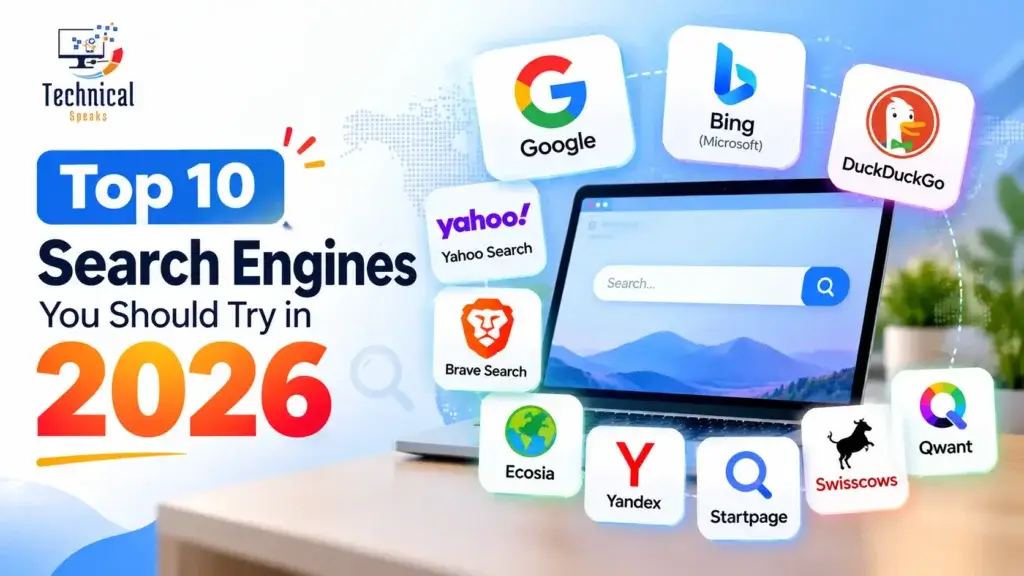
Most people default to Google. That’s fine — but it’s not the only useful option. Some engines focus on privacy, some on rewards, some on regional results, and some on values like reforestation.
Here’s a clear look at 10 search engines worth trying in 2026, who each one is for, and how they fit next to AI answer tools.
Quick note: search engines vs AI answer engines
Classic search engines return links and features. Tools like ChatGPT Search, Perplexity, and Google AI Overviews often return summarized answers with citations. They’re related, but not the same. If your goal is visibility in those answers, see AI answer engines.
1. Google
Best for: Everyday search, maps, images, news, and most SEO work.
Google is still the default for most users and most businesses. It’s fast, deep, and tightly connected to Maps, Images, YouTube, and News.
Try it if: You want the broadest results and the platform most sites optimize for first. For ranking strategy, use our web search engine positioning guide.
2. Bing (Microsoft)
Best for: Windows/Edge users and Microsoft Rewards.
Bing powers search in Edge and ties into Copilot. Image/video search is strong, and Microsoft Rewards can turn searches into points for gift cards.
Try it if: You live in the Microsoft ecosystem or want a solid Google alternative for shopping and how-to queries.
3. DuckDuckGo
Best for: Private, no-profile searching.
DuckDuckGo focuses on not building an ad-tracking profile from your searches. Instant Answers pull quick facts from many sources.
Try it if: You want useful results without personalized tracking.
4. Yahoo Search
Best for: People already in Yahoo Mail / News / Finance.
Yahoo search is powered by Microsoft’s search technology, with deeper ties into Yahoo’s content apps.
Try it if: You already use Yahoo daily and want search inside that same habit.
5. Brave Search
Best for: Privacy + an independent index.
Brave Search aims to use its own index rather than only borrowing Google or Bing results. The experience is clean and privacy-minded.
Try it if: You want an alternative index and a less tracked search flow.
6. Ecosia
Best for: Search with an environmental mission.
Ecosia uses ad revenue to fund tree-planting projects and leans privacy-friendly. Results are typically Bing-powered with Ecosia’s wrapper and mission.
Try it if: You want your searches tied to a cause you care about. Check Ecosia’s own reports for current impact numbers.
7. Yandex
Best for: Russian-language and some Eastern European queries.
Yandex is a major regional engine with strong Cyrillic search and its own product ecosystem.
Try it if: Your audience or research needs are Russia/CIS-focused. Page quality still matters across engines — see the on-page SEO checklist.
8. Startpage
Best for: Google-like results with more privacy.
Startpage delivers Google results through a privacy-focused middle layer, so you get familiar relevance with less direct Google profiling.
Try it if: You like Google’s result quality but want a more private front door.
9. Swisscows
Best for: Family-friendly, privacy-focused search.
Swisscows emphasizes privacy and filters adult/violent content by default, which some families prefer.
Try it if: You want safer default filtering plus privacy positioning.
10. Qwant
Best for: EU-minded privacy search.
Qwant is a European option built around privacy expectations and less personalization from tracking.
Try it if: You want an EU privacy-oriented alternative for general web search.
Comparison table
| Search engine | Best for | Privacy focus | Standout trait |
|---|---|---|---|
| General use | Lower | Depth + Maps/Images/News | |
| Bing | Windows / Rewards | Medium | Copilot + Microsoft Rewards |
| DuckDuckGo | Privacy | High | No search profiling |
| Yahoo | Yahoo apps users | Medium | Ecosystem convenience |
| Brave Search | Privacy + independence | High | Own index approach |
| Ecosia | Eco impact | Higher | Funds reforestation |
| Yandex | Russian / regional | Medium | Strong regional relevance |
| Startpage | Google + privacy | High | Google results via private layer |
| Swisscows | Families | High | Filtered, private defaults |
| Qwant | EU privacy | High | Europe-first privacy angle |
Which should you use?
- Most people / most businesses: Google first
- Privacy day-to-day: DuckDuckGo, Brave Search, or Startpage
- Windows + rewards: Bing
- Cause-driven: Ecosia
- Regional needs: Yandex or Qwant
- Family filtering: Swisscows
You can use more than one. Many people keep Google for work SEO checks and a privacy engine for personal browsing.
What this means for SEO and AEO
If you publish content, Google still drives most organic opportunity in many markets. But users discover brands in Bing, regional engines, and AI answer tools too.
Practical approach:
- Build strong pages for Google (SEO trends 2026)
- Keep technical access clean (technical SEO mistakes)
- Earn real citations and high-quality backlinks
- Study who already wins visibility with SEO competitor analysis
Frequently asked questions
Which search engine is best overall?
Google for most people. “Best” changes if privacy, rewards, or regional results matter more.
Are private search engines as accurate as Google?
Often good enough for common queries. Google usually still wins on complex or highly local/personalized needs.
Will AI replace search engines?
AI is changing how answers appear, but classic engines are integrating AI rather than disappearing overnight.
Should businesses care about non-Google engines?
Yes for audience fit (privacy users, regional markets, Bing on Windows). Prioritize based on your traffic data.
Can I set a different default search engine?
Yes — in Chrome, Edge, Firefox, Safari, and Brave settings under Search engine.
Final thoughts
Trying other search engines helps you see how different people find information — and where privacy or regional needs change the experience. Use Google when you need maximum coverage. Keep a privacy or niche option for the jobs Google isn’t best at. Then build content that holds up across both classic results and AI answers.
About the author
Saurabh K. has been working in SEO and digital marketing for 10+ years, helping businesses grow their search traffic.